

Why Brunate Is Not Como — And Why That Changes Everything About Your Holiday
The funicular takes seven minutes. The distance it covers is vertical, not horizontal — 700 metres of altitude gained in the time it takes to drink an espresso. When the doors open at the top, Como is below you, visible but remote, a city of rooftops and cathedral spires and traffic noise that arrives as a faint hum, like a memory of a conversation you have already left.
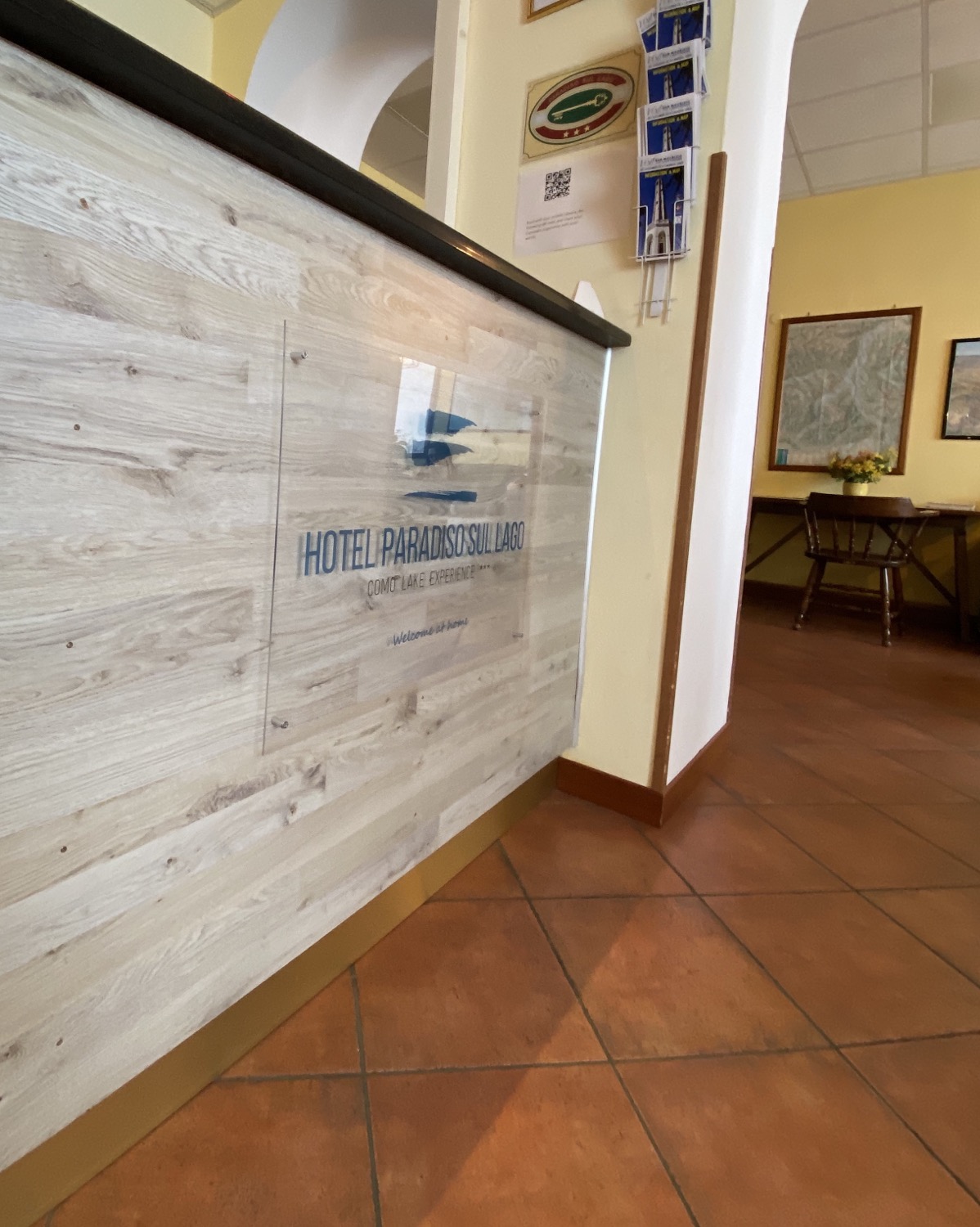
Brunate is not Como. This is not a marketing claim. It is a meteorological, acoustic, and experiential fact. The temperature is two to four degrees cooler. The air is thinner, drier, scented with pine and stone and the particular clarity that altitude brings. The noise level drops by a magnitude that you feel in your shoulders before you register it in your ears. The view — the view is the reason Brunate exists as a destination, and it is the reason that Hotel Paradiso Como, perched at the funicular's summit station since 1969, remains one of Lake Como's most quietly extraordinary places to stay.
The village that time forgot to develop
Brunate has approximately 1,700 residents, a handful of restaurants, a church, a pharmacy, and a lighthouse built in 1927 to honour Alessandro Volta. It does not have a supermarket, a nightclub, a designer boutique, or a hotel chain. What it has is a collection of Liberty-era villas built by Milanese families in the early twentieth century who understood that the best view of a lake is from above it, not beside it.
Hotel Paradiso Como is one of these villas, transformed by the Cattaneo family into a thirteen-room hotel in 1969 and operated by the same family, across three generations, ever since. The rooms are not standardised. Each has its own character, its own view of the lake, its own relationship to the light that enters differently depending on the hour and the season. This is not a boutique hotel in the contemporary sense — there is no design concept, no curated aesthetic, no Instagram wall. There is a family, a building, a kitchen, and a view. These four elements, maintained with care for fifty-seven years, are the hotel's entire proposition.
What altitude does to a holiday
At lake level, Como is beautiful and busy. The Piazza Cavour is lined with cafés. The silk shops on Via Vittorio Emanuele sell scarves to tourists. The boats depart regularly for Bellagio, Varenna, Menaggio — the villages that appear in every Lake Como guide, photographed from the same angles, described with the same adjectives. It is lovely. It is also, in high season, crowded in a way that makes loveliness feel like a commodity.
At 700 metres, the equation changes. The crowd is below you. The noise is below you. The heat, in summer, is below you — replaced by a breeze that moves through the chestnut forest and across the hotel terrace with a consistency that air conditioning cannot replicate because it was not designed, it simply exists. You are close to everything — the funicular runs every fifteen minutes in summer, every thirty in winter — but separated from everything by an altitude that functions as a boundary between the touristic and the personal.
The heated infinity pool at Hotel Paradiso Como makes this altitude tangible. At 34 degrees, the water is warm. The air, at 700 metres, is cool. The lake below is visible over the pool's edge — a visual illusion that merges your small, warm body of water with the vast, cool one below. Guests describe this as the most memorable physical sensation of their stay: the simultaneous experience of warmth and height, of intimacy and enormity.
MamaGina: the kitchen at altitude
The Cattaneo family named their restaurant after Gina, the matriarch who first cooked for hotel guests in 1969. MamaGina Bistrot & Restaurant is not a hotel restaurant in the conventional sense. It is a family kitchen that happens to serve hotel guests and, increasingly, visitors from Como who take the funicular up specifically to eat here.
The bread is baked every morning, in the hotel's kitchen, by hand. The pasta — tagliatelle, pappardelle, ravioli — is made fresh every afternoon. The cakes arrive warm at breakfast, still warm at lunch, freshly baked again for dinner. Everything is homemade. Everything has been homemade since 1969. This is not a policy decision or a brand positioning. It is what happens when a family cooks for its guests the way it cooks for itself: with good ingredients, with attention, with the quiet confidence of people who have been doing the same thing well for a very long time.
The menu follows the season and the hillside. Spring brings wild asparagus and the first herbs from the garden. Summer is lighter — grilled lake fish, fresh vegetables, salads dressed with Lombard olive oil. Autumn means mushrooms, chestnuts, slow ragouts. Winter brings the richest expressions: hearty pasta, root vegetables, Christmas cakes baked over three days. The wine list favours local vineyards — Valtellina, Franciacorta — because these are the mountains you can see from the window while you eat.
The difference between visiting and staying
Most visitors to Lake Como visit it. They arrive by train or car, take a ferry, photograph the villas, eat a lakeside lunch, and leave by evening. They have seen the lake. They have not inhabited it.
Staying at Hotel Paradiso Como in Brunate is a different verb. You wake above the lake. You eat breakfast looking down at it. You swim in a pool that seems to merge with it. You walk through a forest that grows above it. You eat dinner from a kitchen that has been feeding guests above it for fifty-seven years. And when night comes, you step onto your balcony and see the shore towns below as constellations of light reflected in dark water, and you understand that you are not visiting Lake Como. You are living above it. The distinction is everything.
Discover Brunate: 2 nights at Hotel Paradiso Como with breakfast at MamaGina, pool & sauna access, and a guided walk to the Faro Voltiano lighthouse. Book direct on hotelparadisocomo.com.
Commenti